The Beehive as a natural economic system
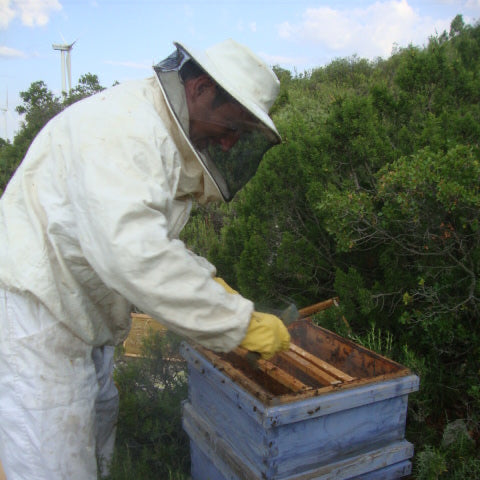
When we talk about a beehive, most people think of bees and honey. It's almost automatic. However, reducing a beehive to that single product is a simplification that obscures what is most interesting, and its internal workings have nothing to do with linear production, but rather with a completely integrated system where each element plays a specific role.
In reality, a beehive is more like a living structure than an agricultural exploitation. There isn't a single objective, but multiple functions that balance each other out. Honey is just one of them, but not even the most structural.
Propolis, for example, is rarely well understood outside the context of the beehive. It is not food, nor is it a secondary byproduct. It is a building and protective material at the same time, made from plant resins that bees transform into a kind of natural sealant. Thanks to it, the hive maintains its internal stability against bacteria, humidity, or intruders. It is, in a way, its defense system.
Wax fulfills a completely different function. It is the material that makes the internal architecture of the hive possible. Without it, there would be no combs, nor the spaces where honey is stored or brood develops. It is a structural element, something like the skeleton of the system.
Honey, for its part, is the most visible part of the whole, but not the most representative in functional terms. Its role is that of an energy reserve, a form of storage that allows the colony to survive when no flowering is available. The interesting thing is that its composition is never completely the same, because it depends on the environment, the climate, and the plants available in each area.
What unites these three elements is that none of them functions in isolation. They do not exist as independent products, but as expressions of the same biological system. The hive does not "produce" honey, propolis, and wax as if they were distinct articles, but rather organizes its activity around different needs that are resolved with different materials. From this perspective, the idea of waste practically disappears. Everything generated has a use within the system and is a closed production model, where each component is linked to the survival of the whole.
Viewed this way, the beehive ceases to be a romantic image associated with honey and becomes something much more interesting, a natural organization system where efficiency is not based on quantity, but on the integration of functions.
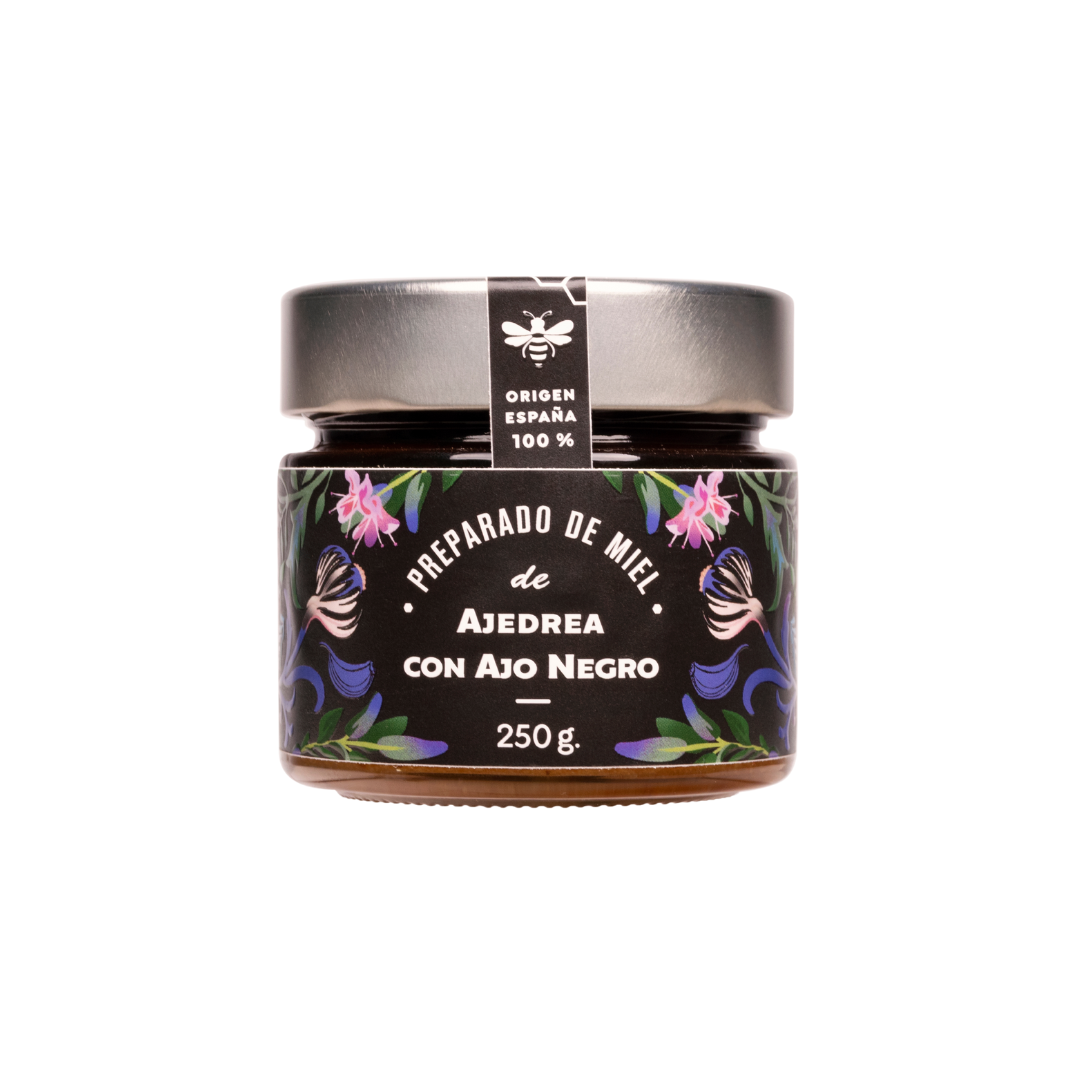
The best way to understand this system is not to read it, but to try it. At Jalea de Luz, you will find honeys and propolis in their purest form, selected to directly reflect this natural organization of the beehive. Explore the complete collection and discover the difference between an isolated product and a living system.